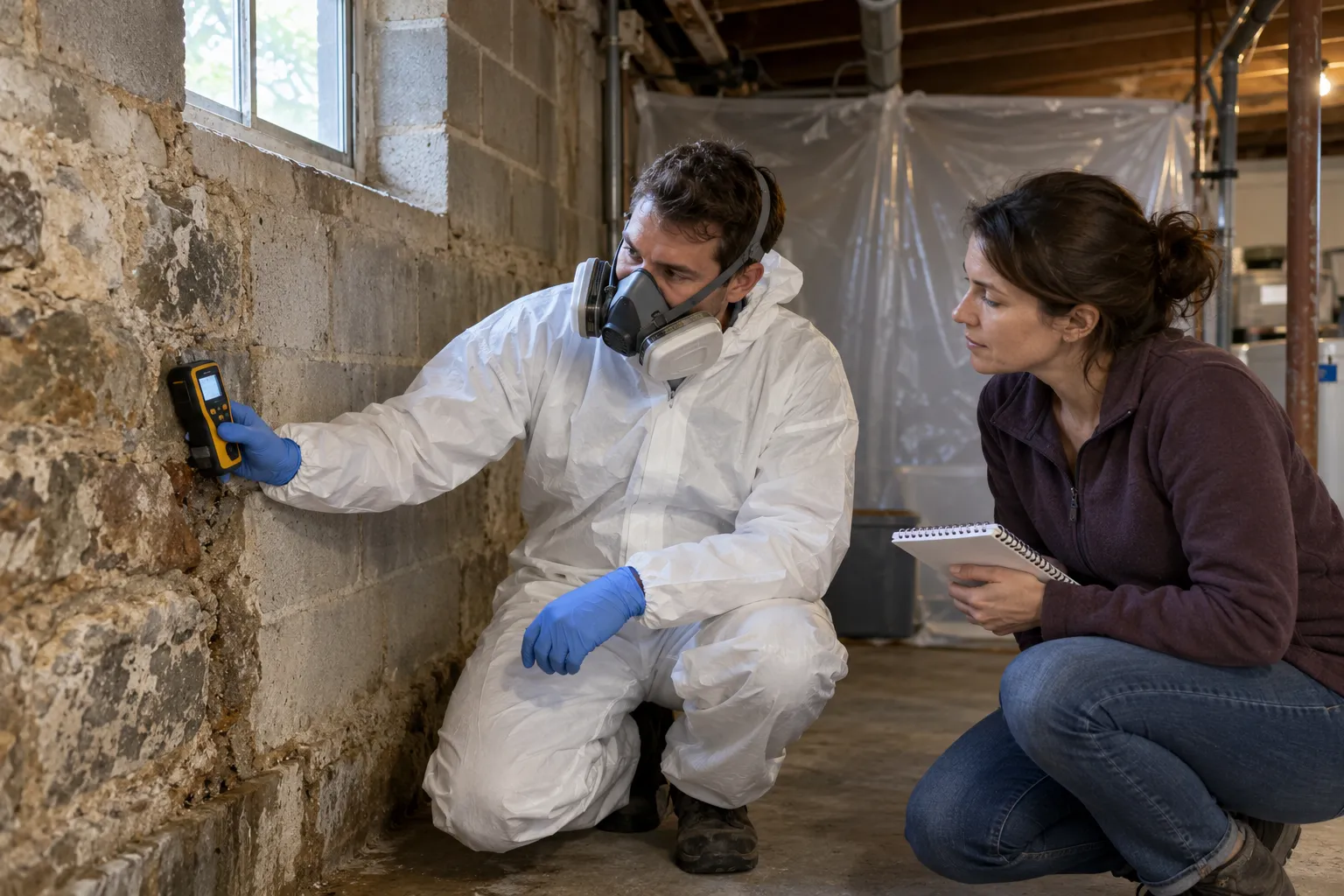
Dark patches on a wall, ceiling or basement beam can look serious, and they may be. Black mold feeds on moisture that lingers in a house. In cold, snowy regions that moisture often comes from ice dams, spring snowmelt, damp stone foundations or coastal storms. Edinburghsleep Mold Help is a referral service. We do not remove mold. We connect homeowners with independent providers in our network who handle black mold remediation.
This page lays out the order of action. First, find the moisture. Next, get an inspection and testing so you know what you have. Then compare providers for residential mold removal. A job done right protects your health, your house and its resale value. You can also request an estimate with no obligation.
Found Black Mold? Start With This Short List
Dark growth on a surface can be upsetting. Work through these steps in order.
- First, stop the water. If a pipe or fixture is leaking and you can shut it off safely, do it.
- Next, close the door to the room. Turn off fans that push air through it.
- Then, leave the patch alone. Scrubbing or sanding sends spores into the air.
- Last, take photos. Note the date, the size and what got wet.
What Black Mold Means
"Black mold" is a common name for dark green or black growth. Some of it is a species called Stachybotrys. Color alone cannot confirm the type. Only lab results can. Either way, a large dark patch deserves careful handling.
Where It Hides in Older Homes
Homes with full basements, stone and block foundations, and Cape Cod rooflines have predictable trouble spots. Check this list:
- Basement walls and the backs of stored boxes
- Rim joists and sill plates along the foundation
- Under sinks and behind bathroom tile
- Ceilings below roof leaks or ice dams
- Knee walls and eaves in half-story rooms
- Shared walls in multi-family buildings
Season by Season: When It Grows
Winter: Warm indoor air meets cold walls and forms condensation. Ice dams push meltwater under shingles.
Spring: Snowmelt soaks the ground. Stone and block foundations wick water inward.
Summer: Humid air and coastal storms keep basements damp.
Fall: Clogged gutters send water toward the house. This is a good time to prepare.
Why Bleach Usually Isn't Enough
Bleach may lighten a stain on a hard surface. It does not reach into wood or drywall, where mold sends roots. The moisture in the bleach can even feed regrowth. Scrubbing also spreads spores to clean areas. A trained provider uses containment and filtered equipment so the problem does not travel.
How Black Mold Removal Works
Providers vary, but most jobs follow this order:
- Inspect and mark the affected area.
- Seal it off with plastic barriers.
- Run HEPA air filtration, often with negative air.
- Remove materials that cannot be cleaned, such as soaked drywall or insulation.
- Clean and treat wood and other solid surfaces.
- Dry everything fully.
- Check the results, sometimes with follow-up testing.
Fixing What Caused It
Removal without a moisture fix is only a pause. Ask the provider to point out the source and what repair is needed. That may be a roof leak, a failed gutter, a grading problem, a bath fan that vents into the attic or a wet foundation wall. Some repairs belong to a roofer or plumber, not the mold provider.
Timing the Job Around the Weather
Mold work can happen in any season. Weather still shapes the plan. In deep winter, drying can be slow and closed-up rooms hold humidity. In spring, a basement may re-wet during a thaw. Ask the provider how they will dry the space and when a moisture reading makes sense.
Protecting Your Home's Value
A clear record helps at resale. Keep the inspection report, lab results, written scope of work, invoice and any post-work test. Buyers and their inspectors often ask for these. Hiding a patch with paint can cost far more later.
Your Belongings
Sort items into three piles: keep, clean and discard. Hard goods such as glass and metal can often be cleaned. Soft items such as couches, rugs and cardboard are harder to save. Ask the provider what they can clean and what should go. Photograph anything you discard, since providers can often help document damage for a claim. Some policies may cover sudden damage, so check your policy.
Testing Before and After
Search for mold inspection near me, and you will find many options. Ask about certified mold testing, meaning who collects the samples and which lab reads them. Testing can map the problem before work and confirm the area is ready afterward.
Questions to Ask the Provider
- What training or credentials do you hold?
- Will you give a written scope and quote?
- How will you contain the area?
- How do you handle the moisture source?
- What does the work cover if growth returns?
- Will you do a final check?
Ready to Compare Providers?
Request a callback to check provider availability in your area, or send the request form. Share your photos and notes. You can compare written quotes before you decide.
What's Included
Containment and Air Filtration
Plastic barriers and HEPA filters help keep spores from reaching clean rooms.
Removal of Damaged Materials
Soaked drywall, insulation and other porous materials are cut out when cleaning will not save them.
Surface Cleaning
Studs, joists and other solid surfaces are cleaned and treated by the provider.
Drying and Final Check
Providers dry the space, check moisture levels and may suggest follow-up testing.
Typical Black Mold Removal Costs
Prices vary by job size, materials and access. These typical U.S. ranges are only a guide. Always get a written quote from the provider before work begins.
| Service | Typical range | Notes |
|---|---|---|
| Small area (under 10 sq ft) | $500 – $1,500 | Often a single wall or ceiling patch |
| One room | $1,500 – $4,000 | Higher if drywall must be replaced |
| Basement or multiple rooms | $4,000 – $10,000+ | Depends on size and extent of growth |
| Attic or crawl space | $1,500 – $6,000 | Hard access raises labor |
| Mold testing and lab fees | $300 – $1,000 | Varies by number of samples |
| Post-removal check | $250 – $800 | May be required for resale or a claim |
How It Works
Stop the Water
Shut off or fix any active leak you can reach safely, and keep the area closed.
Get Inspected and Tested
A provider finds the moisture source and may collect samples for a lab.
Review the Written Quote
Check the scope, the materials to be removed and what the price includes.
Removal, Drying and Follow-Up
The provider contains, removes, cleans and dries, then may check results.
Why Call Edinburghsleep Mold Help
Clear Order of Action
Moisture, testing, then removal. Following the steps in order keeps you from paying twice.
Local Providers
Independent providers know how cold winters, thaws and older foundations affect your home.
Written Quotes
Compare scope and price on paper before you choose a provider.
Resale Protection
Reports and receipts show buyers the problem was found and handled properly.
Other Services
Need black mold removal in Taunton?
Tell us what you see and where. Request a callback to check provider availability, or send a request and get matched with a local provider.
No obligationBlack Mold Removal FAQ
Is black mold dangerous to live with?
It can be. Mold may trigger coughing, congestion or irritation, especially for children, older adults and people with asthma. Reactions vary by person. Limit contact with the area, avoid disturbing it, and talk with a doctor about symptoms.
Can I remove black mold myself?
Very small patches on hard surfaces may be handled with care and protective gear. Larger growth, mold in drywall or insulation, or any patch with an unknown moisture source is better left to an independent provider.
How much does black mold removal cost?
Typical U.S. prices run from a few hundred dollars for a small patch to several thousand for a basement. Size, materials and access all matter, so ask for a written quote.
Get in touch
Tell us what you see and where. Request a callback to check provider availability, or send a request and get matched with a local provider.
No obligation