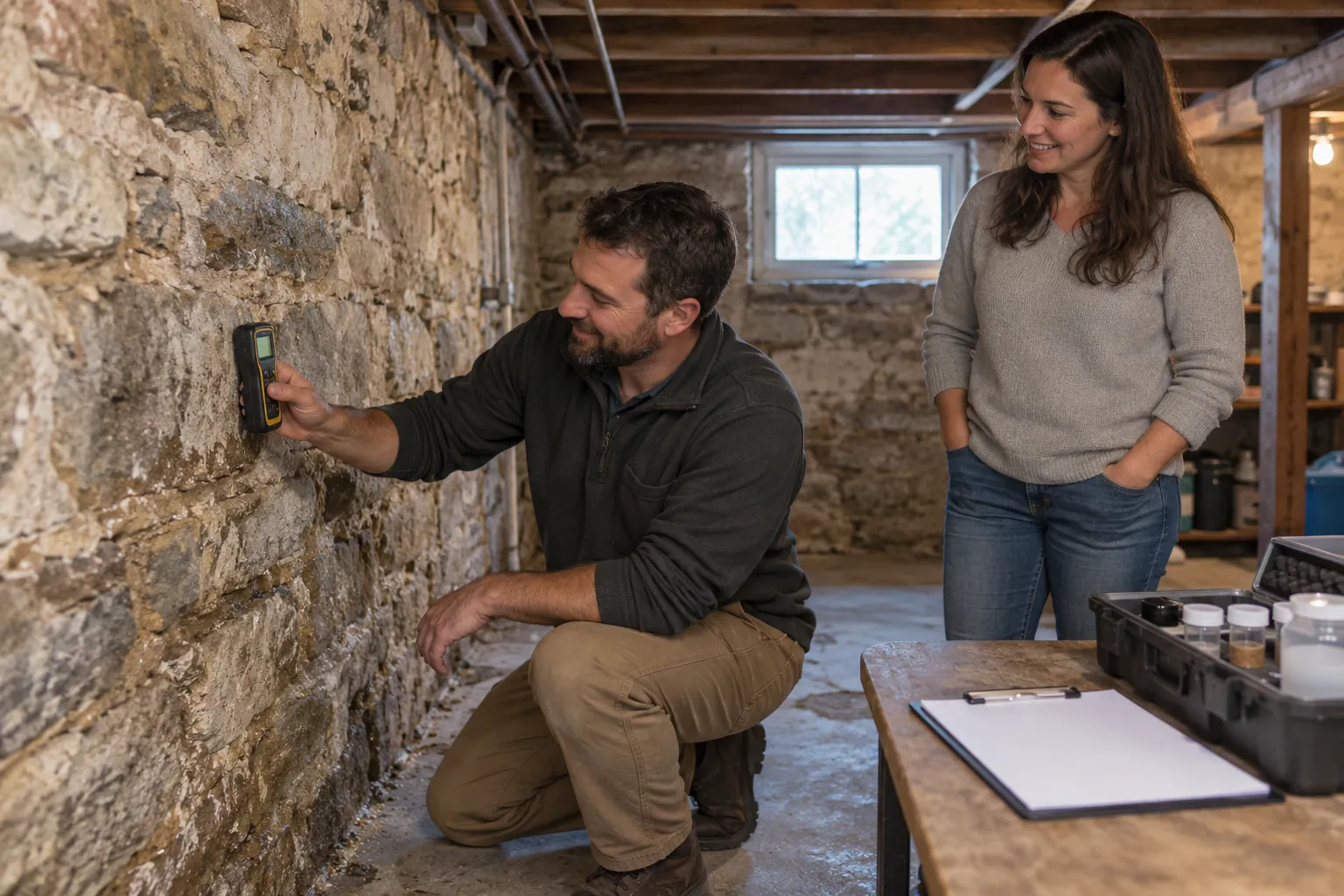
A mold inspection tells you what is growing, where it is, and why it started. Testing adds lab data on top of what a provider sees. Together they give you a clear plan instead of a guess. Edinburghsleep Mold Help is a referral service. We connect homeowners in Taunton and the Taunton area with independent local providers who do the inspecting and sampling.
Timing matters here. Snowmelt, freeze-thaw cracks, coastal storms and damp summers all push water into older basements and walls. Many homes in the Taunton area have stone or block foundations that let moisture in. This page walks through the steps in order: what to do first, what an inspection includes, how to read results, and what to ask before you hire. Use it as a checklist.
Think You Have Mold? Start Here
Do these three things first.
- Note where you see stains, smell a musty odor, or feel damp air.
- Stop any active leak you can safely reach.
- Keep the area closed off. Do not scrub or bleach it.
Disturbing a patch can spread spores to other rooms. Leave it alone until a provider has looked at it.
First, Find Moisture
Mold needs water to grow. No moisture, no growth. So the source matters more than the stain.
Common sources in older homes include seepage through stone or block foundations, roof flashing leaks, ice dams, bath fans that vent into the attic, and cold pipes that sweat. Fix the source or the mold returns.
Is It Really Mold?
Dark spots can be dirt, soot or an old water stain. A trained eye and a moisture meter help sort it out. If you search for mold inspection near me, you will see many names. A referral request narrows that to independent providers who serve your area.
When an Inspection Makes Sense
Book one if any of these fit:
- A musty smell with no visible source
- A past leak, flood or roof failure
- You are buying or selling a house
- Mold came back after a cleanup
- You want proof the work is finished
If you have health concerns, talk to your doctor too.
Season by Season: When to Schedule
Mold follows the weather. Here is how each season changes the job.
Winter
Closed windows trap indoor humidity. Warm air hits cold attic wood and turns to water. Ice dams push meltwater under shingles. Winter is a good time to check attics and top-floor ceilings.
Spring Snowmelt
Meltwater and freeze-thaw cracks send water toward basements. Stone and block walls often show dampness first. Schedule a visit once the ground thaws and the walls start to look or smell damp.
Summer and Coastal Storms
Humid air condenses on cool basement walls and ducts. Wind-driven rain can find weak spots in siding and windows. After a big storm, ask for a check within the next few weeks.
Fall
Fall is a good window before heating season. Clear gutters, check the roof and look at crawl spaces so problems do not sit all winter.
What Happens During a Mold Inspection
Visits vary, but most follow this order.
1. The provider asks about leaks, smells and past repairs. 2. They walk the home and look at ceilings, walls, basement and attic. 3. They scan with a moisture meter and sometimes a thermal camera. 4. They take samples if the situation calls for it. 5. They write up findings and next steps.
Plan on one to a few hours for an average house.
Types of Mold Testing
Not every job needs every test. Common options:
- Air samples: show spore types and levels in a room, compared with outdoor air.
- Surface samples: a swab or tape lift from a stain to name the mold.
- Bulk samples: a small piece of material, such as drywall.
- Moisture mapping: finds wet spots hidden behind finished walls.
Samples go to a lab. For certified mold testing, ask which lab the provider uses and whether it is accredited.
Understanding Your Results
A lab report is not a simple pass or fail. Read it in three parts:
- Which mold types were found
- How indoor counts compare with the outdoor sample
- Which rooms or materials are affected
If the report points to toxic-type growth, such as the kind people call black mold, the provider may recommend containment and black mold remediation. Ask them to explain it in plain words.
Inspection and Remediation: Separate or Together?
Some providers do both. Others only inspect. Each setup has trade-offs.
- Separate: gives you an outside opinion on the scope of work.
- Together: can be simpler to schedule and coordinate.
Either way, get the scope in writing before residential mold removal begins.
How to Prepare for Your Inspection
Before the visit:
- Clear access to the basement, attic and any trouble spots.
- Write down dates of leaks, storms and repairs.
- Keep fans, humidifiers and the HVAC running as usual unless told otherwise.
- Skip cleaning products on the suspect area.
- Gather old reports or photos.
Questions to Ask the Provider
Ask these before you agree to anything:
- Are you licensed and insured where required?
- Do you hold any mold-related certifications?
- Which lab handles the samples?
- Will the report include moisture readings and photos?
- Do you also do the cleanup, and is that quoted separately?
Protect Your Home's Value
A written inspection report shows a future buyer that you found the cause and fixed it right. Keep the report, lab results and any follow-up testing with your home records.
Some policies may cover sudden damage, so check yours. Providers can often help document damage for a claim.
What's Included
Moisture Check
A provider scans walls, ceilings and floors for hidden dampness, which is where most mold starts.
Visual Walk-Through
Attic, basement, crawl space and living areas are checked for stains, odors and past leaks.
Lab Sampling When Needed
Air, surface or material samples are sent to a lab for mold identification.
Written Report
You get findings, photos and suggested next steps so you can compare providers and plan the work.
Typical Mold Inspection and Testing Costs
Prices depend on home size, number of samples and local rates. These are typical U.S. ranges only. Ask each provider for a written quote that lists exactly what is included.
| Item | Typical range | Notes |
|---|---|---|
| Visual inspection only | $300 – $500 | Walk-through and moisture readings, no lab work |
| Inspection with air samples | $450 – $1,000 | Includes an outdoor comparison sample |
| Lab fee per sample | $40 – $150 | Some providers bundle this into the visit price |
| Thermal imaging or moisture mapping | $200 – $600 | Useful for hidden leaks behind walls |
| Whole-home testing, multiple rooms | $800 – $2,000 | Larger or older homes cost more |
| Post-cleanup clearance test | $250 – $700 | Confirms the work was effective |
How It Works
Spot and Stop
Note the signs, stop any leak you can reach safely, and keep the area closed off.
Request Matching
Request a callback or send the form so Edinburghsleep Mold Help can connect you with a local provider.
Inspection and Sampling
The provider checks for moisture, inspects the home and takes any samples the situation requires.
Review the Written Report
Go over findings and next steps, then get written quotes for any remediation work.
Why Call Edinburghsleep Mold Help
Clear Answers
Testing replaces guesses with lab data, so you know what is growing and where before spending on repairs.
Cause Found
Moisture mapping shows why mold grew, which keeps it from coming back.
Written Proof
A report helps with insurance paperwork and with buyers when you sell.
Local Match
Independent providers know area homes, from stone foundations to older Cape styles.
Other Services
Need mold inspection & testing services in Taunton?
Tell us what you see and where. Request a callback to check provider availability, or send a request and get matched with a local provider.
No obligationMold Inspection & Testing Services FAQ
How much does a mold inspection cost?
A basic inspection often runs a few hundred dollars. Adding air or surface samples and lab fees can bring it to $450 to $1,000 or more. Larger homes cost more, so ask for a written quote.
Do I need testing if I can see mold?
Not always. Visible mold may already be clear enough to plan the work. Testing helps when you want to know the type, find hidden growth, or confirm a cleanup worked.
How long does a mold inspection take?
Most visits take one to a few hours, depending on home size and how many samples are taken. Lab results usually take several days to a week or so, depending on the lab.
Get in touch
Tell us what you see and where. Request a callback to check provider availability, or send a request and get matched with a local provider.
No obligation