Mold remediation is more than wiping a wall. A local provider finds where the moisture comes from, seals off the affected area, removes or cleans the damaged materials, and dries the space. Then they check that the job is done. Fix it right, and the mold has little reason to return.
Edinburghsleep Mold Help is a referral service. We do not do the work. We connect homeowners in Taunton and the Taunton area with independent providers in our network. This page lists the steps in order, shows how winter, spring, summer and fall change the timing, and explains what to ask before you hire. Residential mold removal protects your health, your house and its resale value.
Found Mold? Do These Four Things First
Mold on a wall, ceiling or basement beam means there is a moisture problem nearby. Take these steps in order.
1. Limit contact. Keep children, pets and anyone with breathing trouble out of the area. 2. Stop adding water. Shut off a leaking supply line if it is safe to do so. Run a dehumidifier. 3. Leave the growth alone. Scrubbing or spraying can push spores into other rooms. 4. Take photos. Note the date, the location and anything that looks damp.
Next, ask for a match with a local provider who handles residential mold removal.
Why Mold Keeps Growing
Mold needs three things: moisture, a food source and time. Drywall, wood, insulation and dust are all food. Once a surface stays damp for a couple of days, growth can start.
Waiting makes the job larger. Growth moves into wall cavities, under flooring and onto framing. A small patch that could have been cleaned may turn into a section of material that has to be removed. Early action usually keeps the scope smaller.
What Remediation Includes
Providers differ in how they work, but a solid job usually follows this order:
1. Inspect the area and map where the moisture and growth are. 2. Set up containment and air filtration. 3. Remove materials that cannot be cleaned, such as soaked drywall or carpet pad. 4. Clean and treat the surfaces that can stay, like framing. 5. Dry the space fully. 6. Check the results before anything is rebuilt.
Get the plan in writing so you know which steps apply to your home.
Why Containment Matters
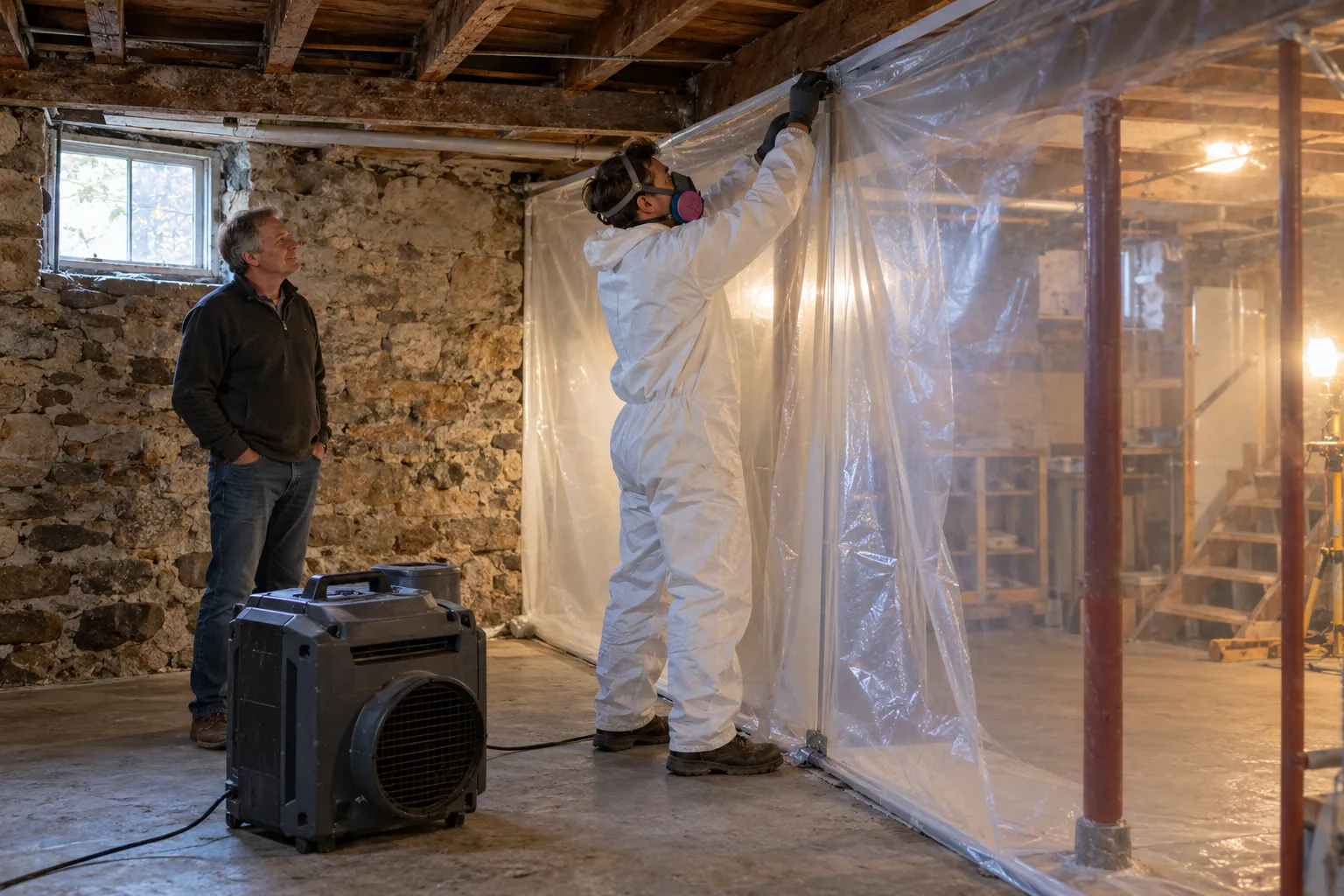
Containment is the plastic sheeting, sealed vents and negative air that keep spores in one place. Without it, the work itself can spread mold to clean rooms.
Ask the provider how they will isolate the area. Look for sealed barriers, air scrubbers with HEPA filters, and a plan for carrying debris out in sealed bags.
First, Find the Moisture Source
Removal without a moisture fix is a short-term result. Common sources in older homes include:
- Leaking roofs, gutters and flashing
- Cracks and seepage in stone or block foundations
- Plumbing leaks inside walls
- Condensation from poor ventilation in bathrooms, attics and crawl spaces
- Dryer vents or exhaust fans that end inside the building
If the water source is not stopped, the mold will likely come back. Ask the provider to explain what they found and what repair is needed.
Season by Season: Timing the Work
Weather affects both how mold grows and how the work gets done. Use this calendar as a guide.
Winter and Early Spring
Cold snaps, freeze-thaw cycles and snowmelt push water against foundations. Basements and crawl spaces can turn damp fast. Ice dams can also send water into attics and walls. Book an inspection when you first notice a musty smell, not after the thaw is over.
Summer
Warm, humid air condenses on cool basement walls and ductwork. Drying can be slower in humid weather, so a provider may use extra equipment. Open windows may help in some spaces and hurt in others, so ask first.
Fall
Fall is a good time to fix gutters, grading, roof flashing and vents before winter. Coastal storms can also bring wind-driven rain. Checking the home before the cold months helps you avoid repeating the cycle.
Working With Your Insurance
Some policies may cover sudden damage, such as a burst pipe. Slow leaks and long-term humidity are often treated differently, so check your policy. Providers can often help document damage for a claim. Keep photos, moisture readings, written estimates and receipts in one folder.
Choosing a Remediation Provider
Get at least two written quotes and compare the scope, not just the total. Ask each provider:
- Do you carry the licenses and insurance required where I live?
- How will you contain the area?
- Will you fix or point out the moisture source?
- What testing happens after the work?
- What does the warranty or workmanship policy cover?
If you searched for mold inspection near me, remember that an inspection and certified mold testing from an independent professional can help define the scope. It also helps to have testing done by someone other than the company doing the cleanup. Request a callback to check which providers in our network are available in your area.
After Remediation: Protect the Home's Value
Fix it right, and keep the records. Save the scope of work, photos, test results and repair receipts. A buyer, an appraiser or an inspector may ask for them when you sell.
Then keep the house dry:
- Keep indoor humidity around 30 to 50 percent.
- Clean gutters each fall and check downspouts in spring.
- Use bath and kitchen fans.
- Check basements and attics after heavy storms or thaws.
What's Included
Moisture and Mold Mapping
The provider locates damp materials and growth so the plan covers the real problem, not only what you can see.
Containment and Air Filtration
Barriers, sealed vents and HEPA air scrubbers help keep spores from drifting into clean parts of the house.
Removal and Cleaning
Damaged porous materials come out. Framing and other solid surfaces get cleaned.
Drying and Final Check
The area is dried fully and checked before any rebuilding starts, so repairs are not sealed over damp spots.
Typical Mold Remediation Costs
Prices vary a lot by home, region and how far the mold has spread. These are typical U.S. ranges, not quotes. Ask each provider for a written estimate that lists what is included.
| Item | Typical range | Notes |
|---|---|---|
| Small area (a wall section) | $500 – $1,500 | Limited removal and cleaning |
| Bathroom or single room | $1,000 – $3,500 | Depends on materials removed |
| Attic | $1,500 – $6,000 | Size and roof access matter |
| Crawl space | $500 – $4,000 | Moisture control may add cost |
| Full basement | $3,000 – $10,000 | Larger scope, more drying |
| Post-remediation testing | $200 – $600 | Often done by a separate tester |
How It Works
Spot and Document
Take photos, note the dates and keep the area closed. Do not scrub or spray the growth.
Request a Match
Request a callback or send the request form, and we connect you with a local provider.
Compare Written Quotes
Check the scope, containment plan, moisture fix and testing so you can compare quotes fairly.
Confirm the Results
Ask for dry readings and a final check before rebuilding. Keep every record.
Why Call Edinburghsleep Mold Help
Protect Health
Removing the source of growth can help reduce irritants that bother allergies, asthma and sensitive lungs.
Protect Value
Documented, proper repairs help avoid surprises during a home inspection when you sell or refinance.
Stop Spread
Early, contained work helps keep mold from moving into walls, floors and other rooms.
Fix Causes
A good scope addresses the moisture too, so the problem is less likely to return.
Other Services
Need mold remediation in Taunton?
Tell us what you see and where. Request a callback to check provider availability, or send a request and get matched with a local provider.
No obligationMold Remediation FAQ
How do I know if I need mold remediation or just cleaning?
Small spots on hard surfaces may be cleaned by a homeowner, but mold on drywall, insulation or wood, a musty smell, or repeated water problems often need a provider to assess the scope.
How long does mold remediation take?
Many jobs take a few days to a week, depending on the size of the area and how long drying takes. Larger projects or hidden moisture can take longer, so ask for a timeline.
Will homeowners insurance cover mold remediation?
Some policies may cover mold that follows sudden damage, like a burst pipe, but long-term leaks are often excluded. Check your policy and ask the provider to help document the damage for a claim.
Get in touch
Tell us what you see and where. Request a callback to check provider availability, or send a request and get matched with a local provider.
No obligation